Eosinophilic otitis media
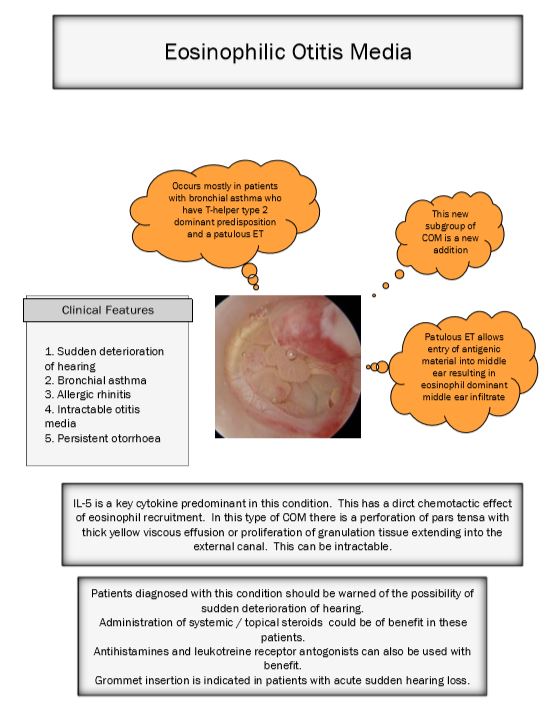
This is actually a recent introduction. This condition is known to cause intractable middle ear pathology. This condition is characterised by excessive accumulation of eosinophils in the middle ear cavity and is associated with persistent middle ear effusion. In addition to this these patients also suffer from bronchial asthma. This condition is known to occur in patients with bronchial asthma who have T-helper type 2 dominant predisposition and also a patulous eustachean tube which allows entry of antigenic material into the middle ear cavity.
This condition was first described by Koch who reported some patients with middle ear effusion contained a large number of eosniophils. He also observed that middle ear secretions tended to be highly viscous and the middle ear mucosa appeared pinikish. This term was coined by Tomioka in 1993.
Pathophysiology:
Pathophysiology of this condition is obviously allergy. These patients commonly had associated allergic rhinitis and branchial asthma. Eosinophils could have been probably attracted to the middle ear cavity by the presence of IL 5 inside the middle ear cavity.
Features of Eosinophilic otitis media :
Sudden deterioration of hearing
Bronchial asthma
Allergic rhinitis
Intractable otitis media
Persistent otorrhoea
Incidence:
Incidence of eosinophlic otitis media is not clearly known. Literature search puts it to be rather common cause of otitis media with effusion.
Managment:
Patients diagnosed with this condition should be warned of the possibility of sudden deterioration of hearing.
Administration of systemic / topical steroids could be of benefit in these patients.
Antihistamines and leukotreine receptor antogonists can also be used with benefit.
Grommet insertion is indicated in patients with acute sudden hearing loss.
